4 min read · Updated
Does Moissanite Pass a Diamond Tester? What Testers Show
Short answer
Usually yes on a basic thermal tester: moissanite moves heat nearly as efficiently as diamond, so the probe calls it diamond. A tester that also reads electrical conductivity, or any gem lab, separates the two without trouble. Passing a pen tester therefore shows the stone is diamond or moissanite; it can't tell you which.
How does a diamond tester work?
The common pen-style tester has a heated metal tip. Touch it to a stone and it measures how quickly the heat flows away. Diamond is an exceptional heat conductor, far better than glass, cubic zirconia or most gems, so the reading jumps and the tester beeps “diamond”. For decades that was enough to separate diamond from CZ, which is a thermal insulator.
Why does moissanite fool thermal testers?
Because silicon carbide also moves heat very well. When GIA's researchers examined the first gem moissanite in 1997, they reported that it reacts to standard thermal probes as if it were diamond. The patent for one of the first electrical gem testers, filed in 1999, gives the same reason: moissanite's thermal conductivity is about equal to diamond's, so heat alone can't separate them.
How do testers tell moissanite from diamond?
By adding an electrical test. Most natural diamonds are electrical insulators, while moissanite conducts a small current under high voltage. A “multi-tester” or moissanite tester runs both checks: the thermal test says “diamond or moissanite”, the electrical test says which. There are exceptions: rare natural blue diamonds containing boron conduct electricity, and some lab-grown diamonds do too, which is why a tester is a screening tool, not a final answer.
A gemologist with a loupe has a simpler tell. Moissanite is doubly refractive, so looking through a stone at an angle, the back facet edges look doubled. Diamond is singly refractive and never doubles. Specific gravity differs too: moissanite is about 3.22 and diamond about 3.52, so a loose moissanite weighs less than a diamond of the same size.
Does passing a tester make moissanite a diamond?
No. It means the tester you used can't tell the two apart. When a seller advertises a moissanite piece as “passes the diamond tester”, they are describing moissanite's thermal behavior, not upgrading the stone. Selling moissanite as diamond because it passed a pen tester would be misrepresentation. We sell moissanite as moissanite, so this is only a curiosity for our customers, not a selling point.
What about cubic zirconia?
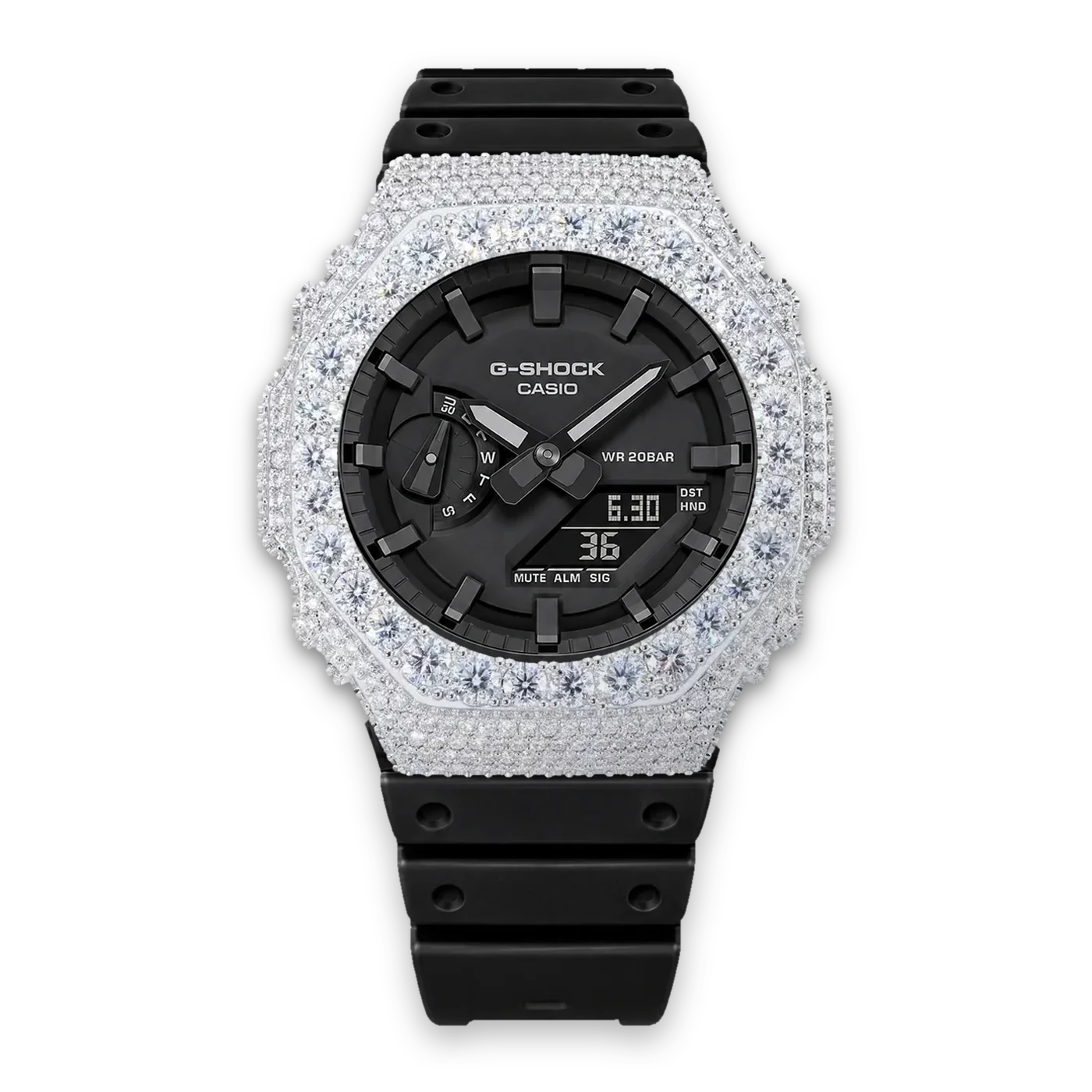
CZ fails a thermal tester immediately, because it is a thermal insulator. If someone tells you a stone passed a diamond tester, it is almost certainly diamond or moissanite, not CZ. That is one quick way to check that a “moissanite” watch really has moissanite.
How can you be sure what you bought?
For a stone of any value, a gem lab is the answer: GIA identifies stones and issues reports. For an iced watch, where the stones are small and many, a multi-tester at a jeweler is the practical check. Keep your invoice: a seller who names the stone in writing is accountable for it. On every GNY Edition build, the stone you chose, CZ or moissanite, is named on the product, the order and the confirmation.
Why do sellers advertise “passes the diamond tester”?
Because it's a fast way to show the stone is moissanite and not CZ or glass, which both fail a heat test. Read that narrowly and it's fair: a moissanite watch that passes a thermal probe is very likely genuine moissanite. Trouble starts when the phrase is used to imply more. A pass on a thermal tester means diamond or moissanite, and the device has no way to say which one.
If you see “passes diamond tester” next to “diamond” in a listing, or in place of naming the stone, treat it as a warning sign and ask the seller to state the material in writing.
Can you test moissanite at home?
Not reliably. Home tricks like the fog test (breathe on the stone and see how fast the mist clears) or reading print through a stone can separate some simulants from diamond, but they're unreliable on small stones set in metal and can't separate moissanite from diamond at all. Inexpensive multi-testers sold online can screen stones, but follow their instructions carefully, because the metal setting and dirt on the stone can confuse the reading. For a definite answer, take it to a jeweler or a gem lab.
What does this mean for an iced G-SHOCK?
On a moissanite G-SHOCK bezel the stones are small and numerous, and you're not paying diamond prices, so testing is mostly reassurance. A jeweler's multi-tester on a few stones will confirm moissanite. On a CZ bezel, a thermal tester will fail the stones, as expected. Either result matches what we sell: the stone you chose, named on your order.
FAQ
Will moissanite pass a diamond tester pen?
Usually yes, on a thermal-only pen. A multi-tester with an electrical check will flag it as moissanite.
Can jewelers tell moissanite from diamond?
Yes. A multi-tester, a loupe (moissanite shows doubled facet edges) or a lab report all separate them.
Does a VVS clarity grade change the tester result?
Clarity grade doesn't change the result. Any moissanite behaves the same on a thermal tester.
What tester can detect moissanite?
A multi-tester or dedicated moissanite tester that measures electrical conductivity as well as heat.
Does lab-grown diamond pass a diamond tester?
Yes. Lab-grown diamond is diamond, so it passes thermal testers. Some lab-grown diamonds also conduct electricity, which is why labs use more than one test.
Is it illegal to sell moissanite as diamond?
Describing a stone as something it isn't is misrepresentation. In the U.S., the FTC's Jewelry Guides require simulated and lab-created stones to be clearly described as such.
Sources
- Nassau, McClure, Elen and Shigley (1997), “Synthetic Moissanite: A New Diamond Substitute”, GIA Gems & Gemology
- U.S. Patent 6,265,884: Electrical conductivity gem tester
- FTC: Guides for the Jewelry, Precious Metals, and Pewter Industries (16 CFR Part 23)
- Wikipedia: Moissanite (specific gravity, thermal conductivity)
- Wikipedia: Cubic zirconia (thermal insulator)
- Wikipedia: Diamond (specific gravity, boron-bearing blue diamonds)